Welcome to the ultimate guide to understanding the modern marketing landscape. If you are looking to grow a business, build a personal brand, or just understand how the internet economy works, you have likely asked yourself: what is digital marketing in simple words?
Simply put, digital marketing is the practice of promoting products, services, or brands using digital channels—primarily the internet. It involves connecting with potential customers where they spend most of their time: online. Whether it is through social media, search engines, emails, or websites, digital marketing is about reaching the right audience with the right message at the right time.
At its core, what is digital marketing? It is an umbrella term that covers all marketing efforts that use an electronic device or the internet. Businesses leverage digital channels such as search engines, social media, email, and other websites to connect with current and prospective customers.
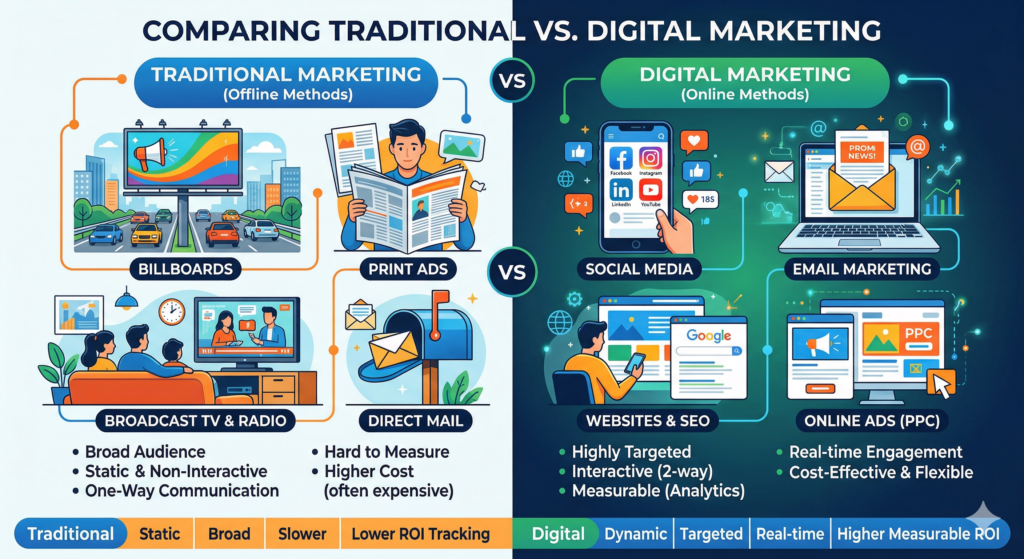
Unlike traditional marketing—which relies on print ads, billboards, and direct mail—digital marketing is highly targeted, measurable, and interactive.
Understanding how does digital marketing work? requires looking at the interconnected web of strategies that guide a user from a stranger to a loyal customer. It is not just one single action, but a coordinated system.
Here is a breakdown of the core components:
I
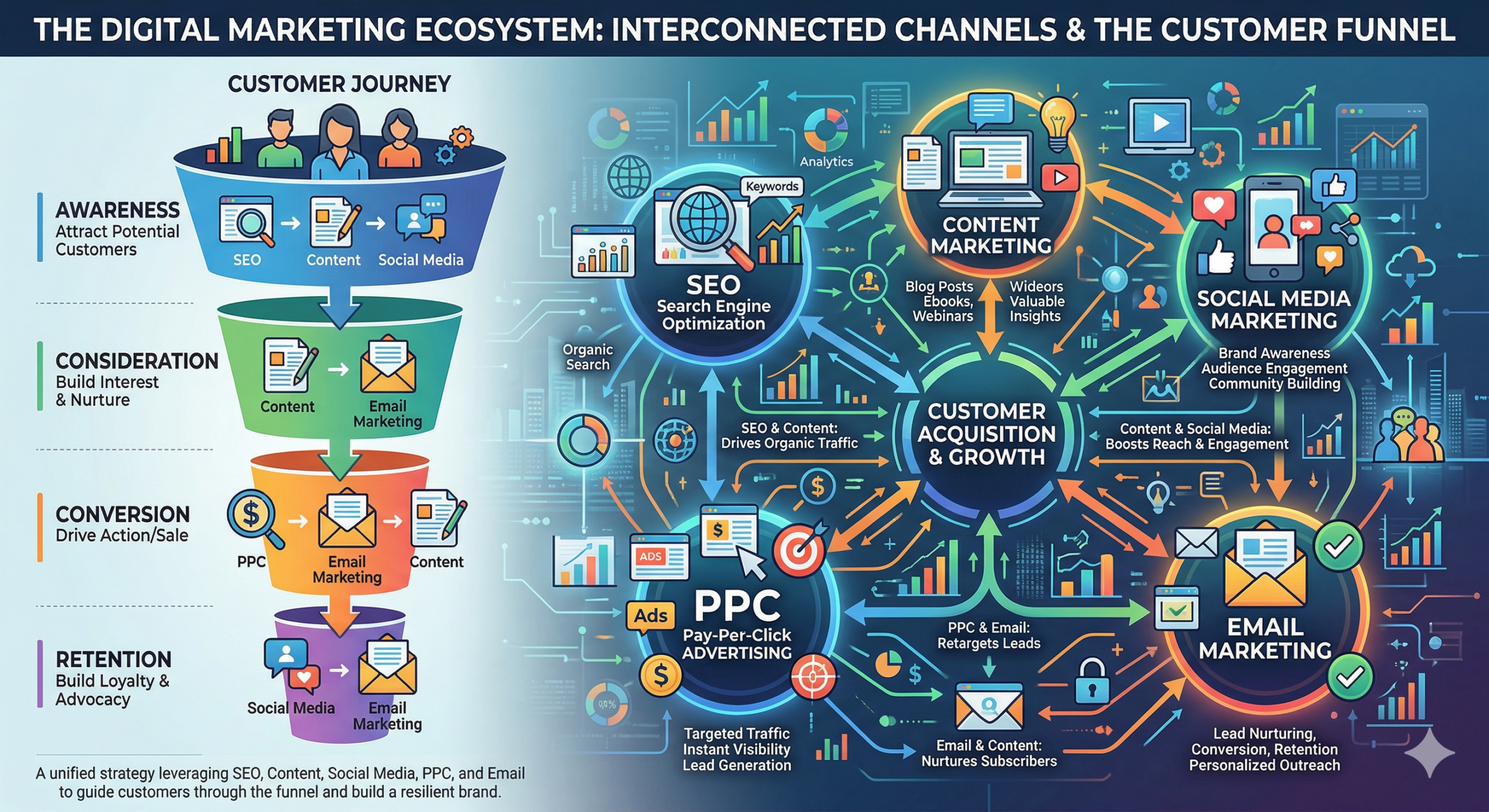
By combining these strategies, performance marketers can track a user’s journey from their first click on an ad to their final purchase.
If you are wondering, why is digital marketing important?, the answer lies in consumer behavior. Today, the buyer’s journey begins online. Before making a purchase, consumers read reviews, compare prices, and research brands on their smartphones.
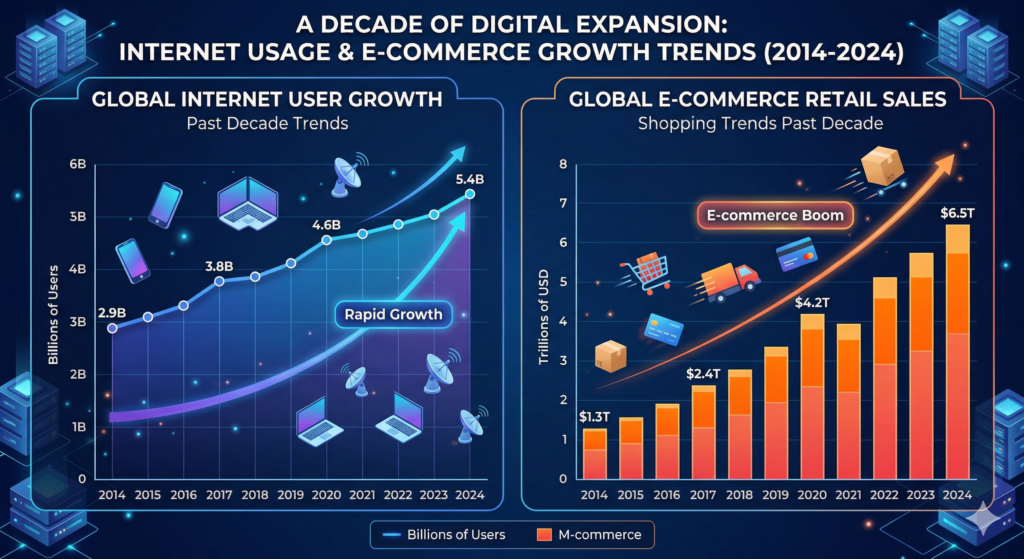
If your business lacks an online presence, you are practically invisible to a massive segment of your target market. Digital marketing levels the playing field, allowing small local startups to compete with global corporations for the exact same audience.
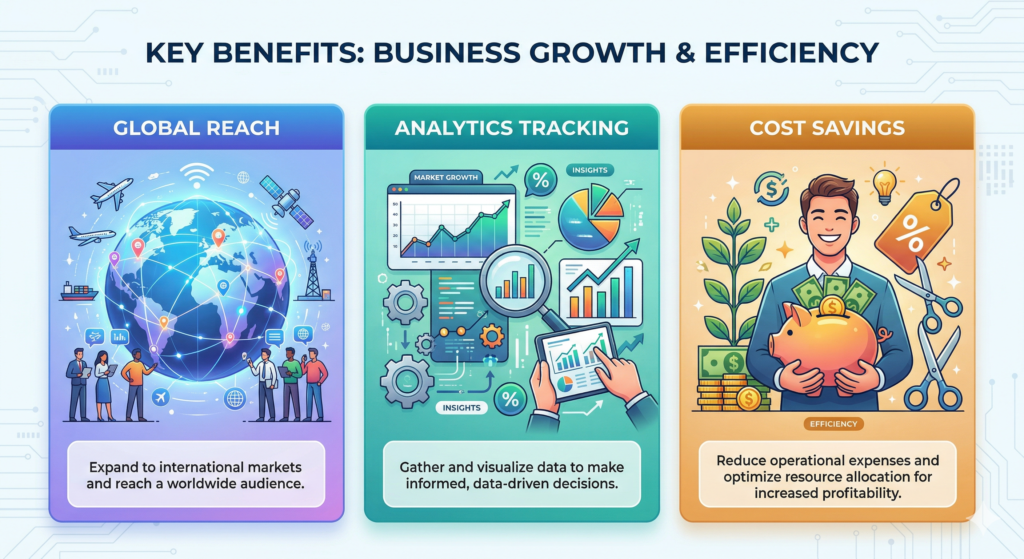
The shift from traditional to digital has unlocked incredible advantages for businesses of all sizes. The benefits of digital marketing include:
| Benefit | Description |
| Global Reach | Your website and ads can be seen by anyone, anywhere in the world, breaking down geographical barriers. |
| Cost-Effectiveness | Campaigns can be run on any budget. PPC and social media ads are often much cheaper than TV or billboard advertising. |
| Measurable ROI | With analytics tools, you can track every click, view, and sale, knowing exactly what is working and what isn’t. |
| Advanced Targeting | You can target audiences based on highly specific demographics, interests, behaviors, and even their physical location. |
| Personalization | Tailoring messages to specific segments of your audience increases conversion rates and builds stronger customer loyalty. |
For beginners, looking at all these channels and analytics dashboards can be intimidating. So, is digital marketing hard to learn?
The honest answer is: no, it is not inherently hard, but it does require continuous learning and adaptability. The fundamental principles of marketing—understanding human psychology, communicating value, and building trust—remain the same. What changes are the tools and platforms.
Starting with the basics like SEO or social media management is quite accessible. Mastering the field and becoming a high-level performance marketer takes hands-on experience, testing, and keeping up with platform updates.
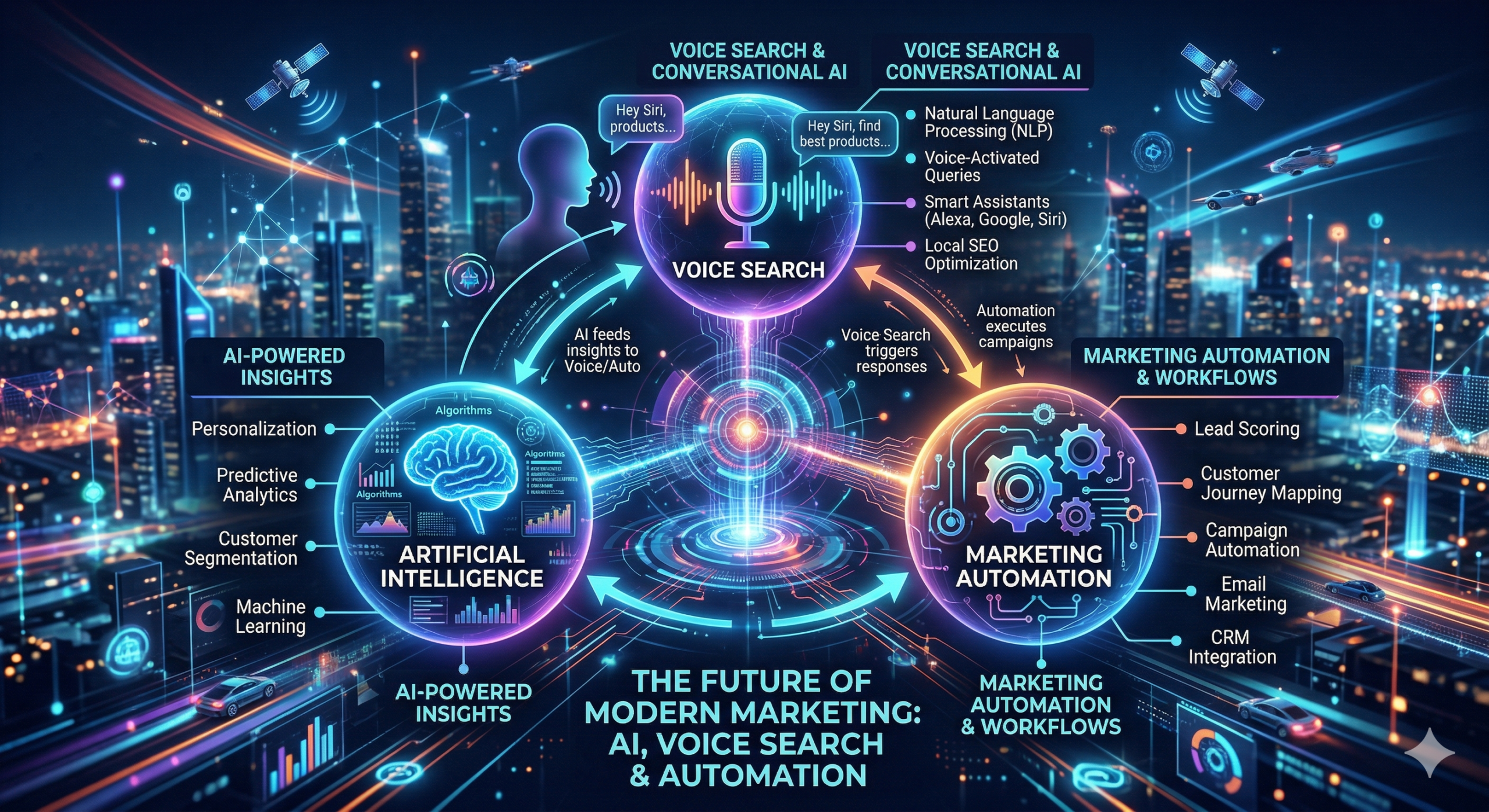
Looking ahead, the future of digital marketing is incredibly exciting and dynamic. We are moving toward a landscape heavily influenced by automation and intelligence.
Whether you are building a freelance web design portfolio or scaling a traditional manufacturing business, mastering digital marketing is the key to modern growth. By understanding these simple concepts, you can start leveraging the internet to build your brand and connect with your audience effectively.